.svg)


Top Web Design Trends for 2026

Every year, someone publishes a list of web design trends. Most of them read like a mood board. Pretty visuals, vague advice and no clear reason why any of it should matter to your business. This is not that list.
The web design trends 2026 is bringing are different. The shift happening right now is not just aesthetic. It is structural. Websites are being rebuilt from the ground up to be faster, smarter and more human, and the businesses that understand this are pulling ahead of competitors who are still running on sites they built three years ago.
Your website is your hardest working sales tool. It is open 24 hours a day, seven days a week, making first impressions and either converting visitors or losing them. The modern web design trends shaping 2026 are not about chasing what looks cool. They are about building digital experiences that perform. Here is what every business owner and marketing director needs to know right now.
1. AI personalization is moving from novelty to expectation
A few years ago, AI personalization on websites felt like something only Amazon or Netflix could pull off. That is no longer true. In 2026, websites are adapting in real time to who is visiting, what they have looked at before, where they came from and what they are most likely to do next.
What does this look like in practice? A returning visitor sees different hero content than a first-timer. A user who browsed your services page three times gets a more direct CTA than someone landing cold. An eCommerce store surfaces products based on browsing behavior rather than showing everyone the same homepage. These are not futuristic features. They are available now and businesses using them are seeing measurable lifts in engagement and conversion rates.
If your website currently shows every visitor the exact same experience regardless of who they are or where they are in the buying journey, you are leaving conversions on the table. AI personalization is one of the current web design trends 2026 that has moved from nice-to-have to competitive necessity.
2. Performance-first development is no longer optional
Speed has always mattered in web design. But in 2026 it is the foundation everything else is built on. Google's Core Web Vitals are now a direct ranking factor, which means a slow site is not just a bad user experience. It is an SEO problem and a revenue problem at the same time.
Research consistently shows that a one-second delay in page load time can reduce conversions by up to 7 percent. Page speed is one of the fastest and most measurable things you can act on when you want to improve conversion rate without touching your ad spend. On mobile, where the majority of web traffic now comes from, users expect pages to load in under three seconds or they leave. The businesses winning in search right now are not just investing in content and backlinks. They are investing in lean, fast, well-built websites that load instantly on any device and any connection. Businesses that get this right are typically working from a clear digital branding foundation that treats the website as a brand asset first and a technical project second. If your site is slow, no amount of great design or marketing spend will fix the underlying leak. If your team does not have the technical capacity to fix these issues, the most practical step is to outsource web development to specialists who can handle it.
The simplest thing you can do right now is run your site through Google's PageSpeed Insights and look at your Core Web Vitals score. That number tells you more about your site's business health than almost any other metric.
3. Mobile-first has become mobile-only thinking
For years, mobile-first was the goal. Design for desktop, then adapt for smaller screens. That thinking is now outdated. In 2026, the approach has flipped entirely. The best web designers are building for mobile as the primary experience and scaling up to desktop, which makes the responsive vs adaptive design decision one of the first technical calls that shapes how that works in practice.
This matters because the majority of your visitors are on their phones. They are scrolling with their thumbs, not clicking with a mouse. They are viewing vertical content, not horizontal layouts. Navigation needs to be reachable with one hand. Buttons need to be large enough to tap without frustration. Images need to load fast on a cell connection. Businesses that treat mobile as an afterthought are not just delivering a worse experience to the majority of their audience. They are actively losing customers to competitors whose sites feel native on a phone. This kind of thumb-first thinking is what a UI/UX design company treats as a starting constraint rather than a final adjustment.
4. Human-centered design is winning against AI sameness
Here is something interesting happening in 2026. As AI tools have made it easier than ever to generate websites, logos, copy and visuals in seconds, the web has started to look increasingly the same. Clean, competent, forgettable. Users are noticing, even if they cannot articulate why, and they are gravitating toward brands that feel distinctly human.
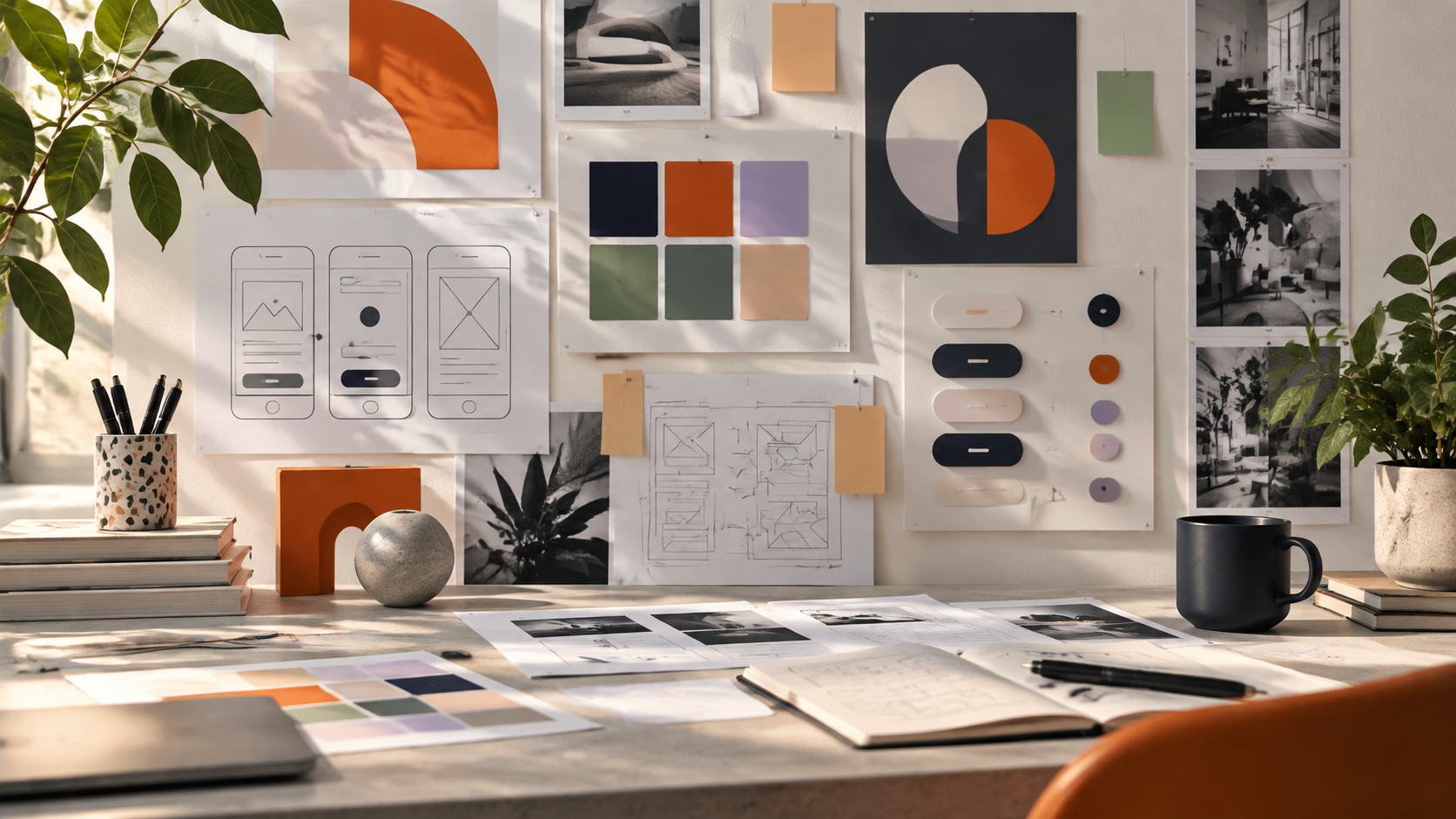
The counter-trend to AI sameness is human-centered design. Hand-drawn illustrations, imperfect textures, warm color palettes, custom typography, and logo design trends 2026 moving away from AI-generated sameness - genuine brand personality is having a significant moment. This is not nostalgia for its own sake. It is a deliberate choice to stand out in a sea of generated content by showing that a real team with real taste made deliberate decisions about how a brand shows up online. The same shift is driving the logo design trends 2026 has brought, where hand-drawn details and imperfect typography are replacing machine-made polish.
For businesses, this is a real opportunity. If your competitors are all using the same AI-generated stock imagery, the same template layouts and the same generic color schemes, a website that feels genuinely crafted is an immediate differentiator. The brands investing in a creative web design agency in 2026 are not just looking better. They are building more trust, more quickly, with the people they are trying to reach.
5. Bold and expressive typography is doing the heavy lifting
Typography has always been part of web design. In 2026 it has become one of the primary tools brands use to make an impression. Oversized headlines, kinetic text that responds to scroll, variable fonts that shift weight and style fluidly, and expressive typeface pairings that carry the personality of a brand before a single image loads. Type is no longer just a readability tool. It is a brand statement.
For businesses this means font choices deserve far more attention than they typically get. The right typeface communicates confidence, creativity, trust or energy in a fraction of a second. Knowing which fonts to avoid is just as important as knowing which ones work, and there are more worst fonts quietly killing brand credibility than most business owners realize. The practical takeaway for most business websites is to invest in one strong, distinctive headline font and pair it with something clean and highly readable for body text. That combination alone can transform how a site feels to a first-time visitor.
6. Bento grid layouts are becoming the new standard
If you have used an iPhone in the last couple of years, you have seen a bento grid. Named after the Japanese lunchbox with its neatly divided compartments, bento grid layouts organize content into asymmetric blocks of varying sizes that sit together cleanly on a page. Apple popularized it. Now it is everywhere.
The reason bento grids are one of the standout 2026 web design trends is that they solve a real problem. How do you show a lot of information without overwhelming the visitor? Bento grids create visual hierarchy naturally, drawing the eye to the most important content first while giving supporting information its own space. For eCommerce brands, SaaS companies and agencies with multiple services or features to communicate, this layout approach is genuinely useful and not just aesthetically trendy.
7. Scroll storytelling keeps visitors on the page longer
Static pages are giving way to cinematic ones. Scroll storytelling, sometimes called scrollytelling, uses scroll-triggered animations, parallax effects and sequenced reveals to guide a visitor through a narrative as they move down the page. Instead of landing on a wall of information, the visitor experiences the content as a story that unfolds at their own pace.
The business case for this is straightforward. The longer a visitor stays on your page, the more likely they are to convert. Scroll storytelling naturally extends time on site by making the experience of reading a page feel more engaging than passively scanning text. It also helps complex businesses, SaaS products, professional services firms and agencies communicate what they do in a way that feels clear and compelling rather than dense and overwhelming. The key is using it with purpose. Animation for its own sake adds load time and distraction. Animation that guides a visitor toward a decision adds value. This is why scroll storytelling is now a staple of landing page design services, where every scroll interaction has to pull the visitor closer to a single conversion point.
8. Accessibility and sustainability are now table stakes
Accessibility has been a best practice in web design for years. In 2026 it is increasingly a legal requirement. ADA compliance lawsuits against businesses with inaccessible websites have been rising steadily, and the businesses most at risk are often small and mid-sized companies that assumed the rules did not apply to them. Some sectors face even stricter scrutiny. In web design for higher education, for example, accessibility is a federal requirement rather than a best practice.
Building to WCAG standards means your site works for users with visual, auditory, motor and cognitive disabilities. That includes proper color contrast, screen reader support, keyboard navigation and accessible form design. Beyond the legal protection, accessible websites tend to perform better across the board. They load faster, rank better in search and deliver a cleaner experience for every user, not just those with specific needs. Sustainable design, which focuses on lean code and optimized assets to reduce the digital carbon footprint of a site, is following a similar trajectory. Both are moving from optional considerations to baseline expectations in 2026.
9. Dark mode is now an expectation, not a feature
Dark mode used to be a premium feature that impressed users when they discovered it. In 2026 users expect it. Operating systems default to it. Applications support it. And websites that have not implemented it can look jarring or feel outdated to a growing segment of visitors who browse exclusively in dark mode.
Implementing dark mode properly is more involved than simply inverting colors. Getting dark mode design right takes decisions about color palettes, typography contrast, and component behavior that don't come up in a light-only build. It requires thinking through your entire color palette, how images and illustrations read on dark backgrounds, how typography contrast holds up and how your brand identity translates across both modes. For businesses planning a new website or a redesign, building dark mode in from the start is significantly easier and cheaper than retrofitting it later.
10. Design only works if it converts
Every trend on this list is interesting. None of it matters if your website does not convert visitors into customers. This is the point most trend articles miss. The goal of following modern web design trends in 2026 is not to have a website that looks current. It is to have a website that performs.
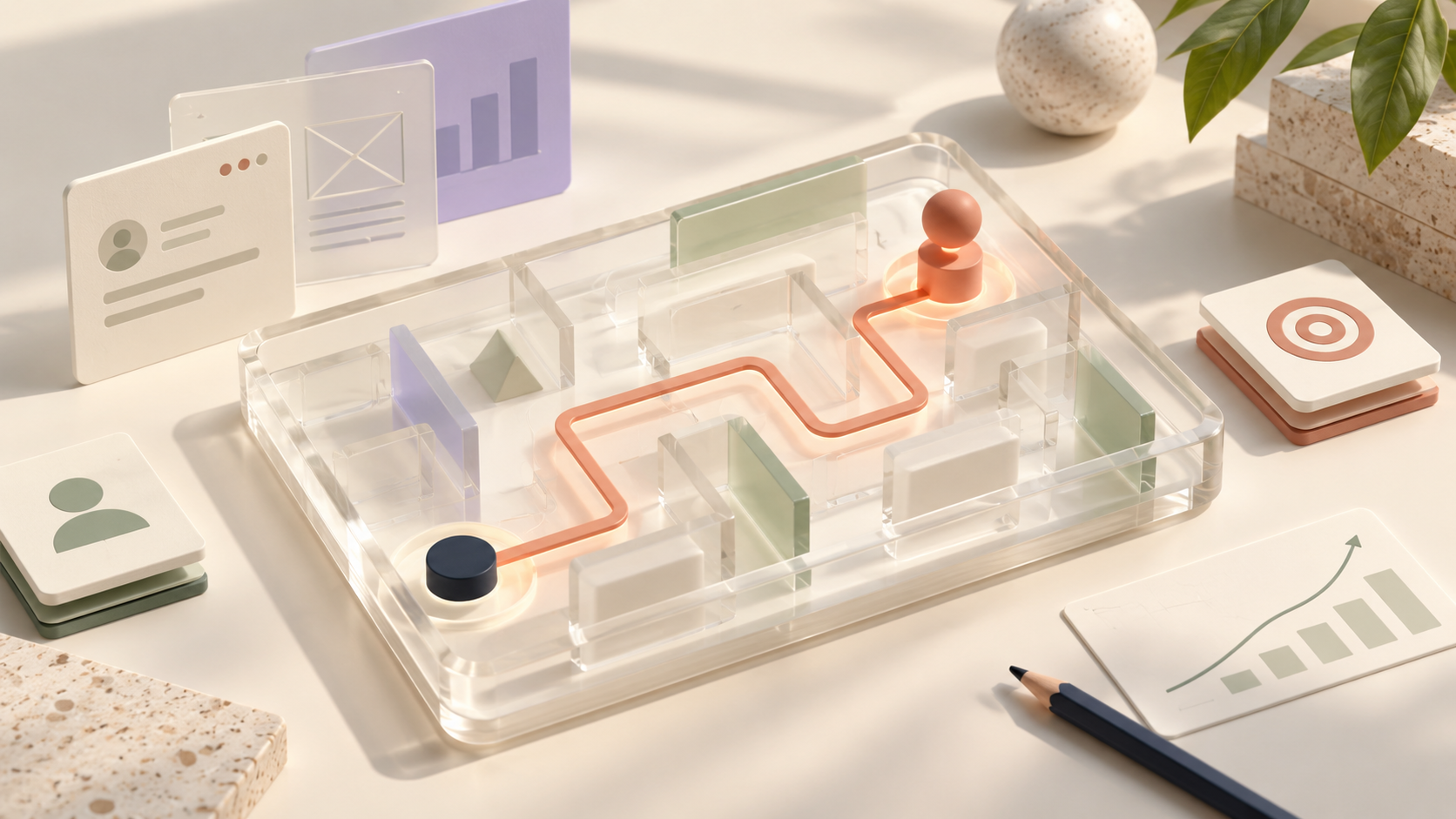
That is really what makes a good website: every design decision should be evaluated against one question - does this help a visitor understand what we do, trust us and take the next step? The best-performing websites in 2026 are not just beautifully designed. They are built with CRO principles baked in from the start, clear user flows, intentional CTAs, A/B tested components and analytics that inform ongoing improvements. That is what separates a website that looks good from one that actually grows a business, and it is exactly how our website design & development services are structured.
11. Is your website built for 2026?
The businesses pulling ahead right now are not waiting for their next big campaign or their next funding round to invest in their website. They are treating it as the growth tool it is. Even small updates rooted in proven web design tips can meaningfully shift how a site performs long before a full redesign is on the table.
Web development company FAQs