Local SEO for Small Businesses: Practical Guide
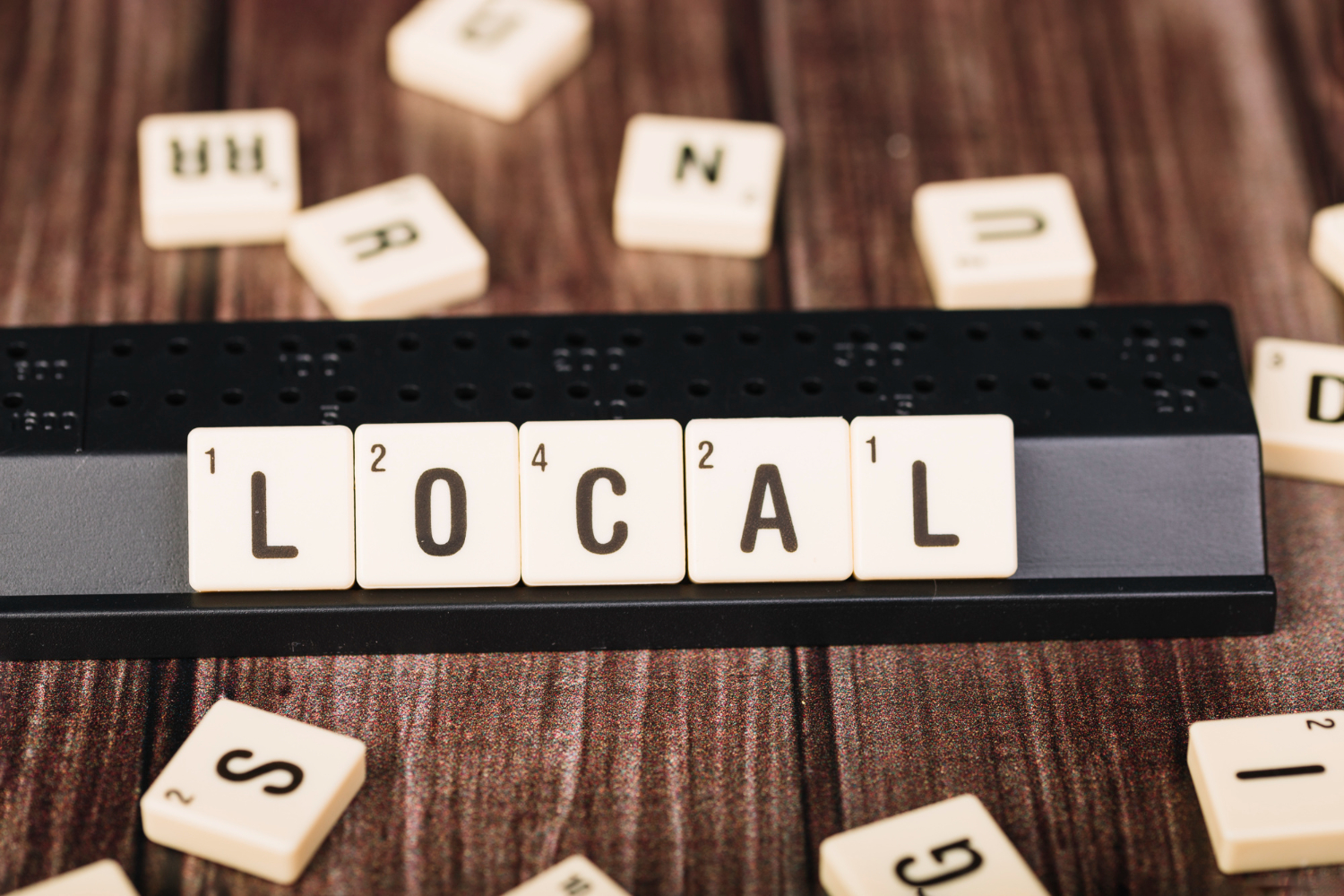
Someone within a few miles of your business just pulled out their phone and searched for exactly what you sell. The only question that matters is whether they find you or the shop down the street. That moment, repeated hundreds of times a week across your area, is what local SEO is built to win.
Most guides make SEO for small local business sound more complicated than it needs to be. This guide breaks it down simply: what local SEO is, why it matters, and the exact steps to start showing up when nearby customers search. No jargon, no fluff, just the work that moves the needle.
What is local SEO for small businesses?
Local SEO is the practice of optimizing your online presence so that people near you find your business when they search for what you offer. Where regular SEO competes for searchers anywhere in the world, local SEO focuses on the customers who can actually walk through your door or call your number, the ones searching "coffee shop near me," "emergency plumber open now," or "best dentist in [your city]."
The difference shows up in the results themselves. A local search triggers Google's map pack, the cluster of three business listings with a map at the top of the page, plus localized organic results below it. Ranking in those spots puts you in front of people at the exact moment they are deciding where to spend money, which is why local SEO tends to drive foot traffic, phone calls, and bookings rather than just page views.
Why local SEO is important for small business
If your customers come from your city or region, local SEO is one of the highest-return things you can do with your marketing time. Here is why it matters so much for small businesses specifically.
It levels the playing field against bigger competitors
In broad, national search, a small business is competing against companies with huge content teams and advertising budgets. Local search narrows the field to the businesses in your area. That means a single-location shop can outrank a national chain for searches in its own neighborhood, simply by doing the local fundamentals better than the competitors nearby.
It reaches customers who are ready to buy
Local searches carry unusually high intent. Someone typing "near me" or naming your town is rarely just browsing, they often need something soon and want it close by. That intent is what makes local traffic convert so well, and it is also why pairing local SEO with a site that is built to improve website conversion rate turns that visibility into actual customers instead of bounced visits.
It is cost-effective
Many of the core tactics, claiming your Google Business Profile, keeping your business details consistent, and gathering reviews, cost nothing but time. For a small business watching every dollar, that makes local SEO one of the few channels that can compete with paid ads without the ongoing ad spend. [Comment for Danielle: a verified stat on local or "near me" search intent or conversion rates would strengthen this section. Want me to source one we can cite?]
It builds trust and lasting visibility
Showing up consistently in local results, backed by genuine reviews and accurate information, builds credibility with both customers and search engines. And unlike a paid ad that vanishes the moment you stop paying, rankings you earn through local SEO tend to hold, compounding into steady visibility over time.
How local search rankings actually work
Before the tactics, it helps to understand what Google is weighing. Local rankings come down to three factors, and almost everything in this guide maps back to one of them.
Relevance is how well your business matches what someone searched for. A complete profile and a website that clearly describes your services help Google connect you to the right searches. Distance is how close you are to the searcher or to the location named in their query, which you cannot change but can influence by making your location unmistakable. Prominence is how well known and well regarded your business is, shaped by reviews, mentions across the web, and links from other local sites.
Think of the rest of this guide as a set of levers for those three factors. You will not move all of them overnight, but steady work on each one is what earns a spot in the map pack.
How to do local SEO, step by step
Here is the practical core. Work through these in order, since each one builds on the last.
Set up and optimize your Google Business Profile
If you do only one thing, do this. Your Google Business Profile is the free listing that feeds the map pack and the panel that appears when someone searches your business by name. Claim it, verify it, and then complete every field rather than leaving it half-finished.
That means your exact business name, address, and phone number, your primary category and any relevant secondary categories, your hours, a description written in plain language that mentions what you do and where, and real photos of your space, your team, and your work. Keep it current, especially hours around holidays, and use the profile actively by posting updates and answering questions. A complete, active profile is one of the strongest signals you can send.
Find the right local keywords
Local keywords are the phrases your customers actually type, and they usually follow simple patterns: "[service] in [city]," "[city] [service]," and neighborhood-specific terms like "[neighborhood] [service]." A bakery in Pasadena wants to be found for "bakery in Pasadena" and "Pasadena custom cakes," not just the generic "bakery."
You do not need expensive tools to start. Google's own autocomplete, the "people also ask" and "related searches" sections, and the language your customers use in reviews and emails all reveal real phrases. It also helps to think through how a local customer moves from first search to final decision, which is where building a simple user journey map pays off, since it shows what someone needs to see at each step before they choose you. Once you know the terms, work them naturally into your website and profile rather than forcing them in. This is especially important for SEO for lawyers, where searches often combine a specific legal service with a city or region, making practice-area and location relevance central to attracting the right local leads.
Keep your NAP consistent everywhere
NAP stands for name, address, and phone number, and consistency matters more than most owners expect. When your details appear differently across your website, your Google profile, Yelp, and other listings, even small mismatches like "St." versus "Street," it makes search engines less confident about your business, and that uncertainty can cost you rankings.
Audit every place your business is listed and make the NAP identical across all of them. Pick one exact format and use it everywhere, then update it consistently whenever anything changes.
Build local citations and directory listings
A citation is any online mention of your business details, usually in a directory or listing site. Getting listed on the major directories, industry-specific sites, and local resources like your chamber of commerce does two things: it gives customers more ways to find you, and it reinforces to search engines that your business is established and legitimate.
Consistency carries over here too, so every citation should match the same NAP you settled on above. A common question that comes up here is whether do nofollow links help SEO, since most directory links are tagged nofollow. The short answer is yes for local visibility and trust signals, even if they do not pass ranking authority the way traditional links do.
Earn and respond to customer reviews
Reviews are one of the clearest prominence signals, and they directly influence whether people choose you once they find you. Make asking for reviews a routine part of your customer interactions, in person, in follow-up emails, or with a simple link, and focus on the platforms that matter most for your industry, starting with Google.
Then respond to them, all of them. Thanking happy customers shows you are engaged, and handling a negative review calmly and constructively often does more for your reputation than the complaint did to hurt it. Responding signals to both customers and Google that there is an active, attentive business behind the listing.
Optimize your website for local search
Your profile gets you into the map pack, but your website still does heavy lifting for relevance and trust. Put your location in the places that count: page titles, headings, your service page design, and your contact and about pages. Make sure your full NAP and an embedded map appear on the site, ideally in the footer so they show on every page.
If you serve several areas or run multiple locations, give each one its own page with genuinely useful, location-specific content rather than near-duplicate copy. Adding local business schema markup helps search engines read your details cleanly. This is also where overall site quality matters, since a slow or clunky site undercuts everything else, and it is worth having a capable web development company handle the technical side if it is not your strength.
How to show up in AI Overviews and the map pack
Two of the most valuable spots in local search are the map pack and, increasingly, Google's AI Overviews, the summarized answers that now sit above traditional results for many searches.
The map pack rewards exactly the work above: a complete and active Google Business Profile, consistent NAP, strong reviews, and proximity to the searcher. There is no shortcut here, but a business that nails the fundamentals is the one Google pulls into those top three spots.
AI Overviews work on a similar principle. AI-generated answers lean on businesses with clear, structured, trustworthy information, accurate details across the web, well-organized website content, and a solid base of reviews. The same groundwork that earns you the map pack also makes you the kind of source these summaries cite, which means getting the fundamentals right is fast becoming the way to stay visible as search shifts toward AI answers. [Comment for Danielle: keeping this evergreen and Google-focused. Let me know if you want it broadened to other AI search tools.]
Your local SEO checklist
A quick recap you can work through and hand to anyone helping with the site:
- Claim and verify your Google Business Profile
- Complete every field: name, address, phone, categories, hours, description, photos
- Settle on one exact NAP format and use it everywhere
- Audit existing listings and fix any inconsistencies
- Identify local keywords using the "[service] in [city]" pattern
- Work those terms naturally into your site and profile
- Get listed in major, industry, and local directories
- Set up a routine for asking customers for reviews
- Respond to every review, positive and negative
- Add your location to page titles, headings, and key pages
- Show your full NAP and a map on the site, ideally site-wide
- Create separate pages for each location or service area
- Add local business schema markup
- Track your rankings, calls, and traffic, then keep refining
DIY or hire help, and how long local SEO takes
You can start local SEO on your own. Setting up your Google Business Profile, checking that your business details are correct, and asking customers for reviews are all realistic first steps for most small business owners.
But local SEO becomes more demanding once the work moves beyond the basics. Your website may need stronger service pages, better location targeting, cleaner technical structure, faster performance, local schema markup, clearer calls to action, and tracking that shows which visits turn into calls, bookings, or leads.
The honest trade-off is time. Local SEO is not a one-time setup. It builds momentum over weeks and months as your profile improves, reviews grow, your website becomes clearer, and your business earns more trust online. If you cannot give that work steady attention, bringing in a full-service digital marketing agency can keep the strategy moving instead of letting it sit on a to-do list.