.svg)


10 Top Branding Agencies in 2026
Choosing a branding agency is not just about finding the portfolio with the best-looking logos.
The right partner depends on what your business actually needs. Some agencies specialize in large-scale brand transformation and portfolio strategy. Others excel at building new brands, creating distinctive visual identities, or translating an existing brand into digital products, websites, packaging, and campaigns.
That can make comparing branding firms difficult. Two agencies may both offer “branding” while delivering very different levels of strategy, design, implementation, and ongoing support.
To help narrow the field, we reviewed the current capabilities, positioning, and work of established branding agencies and selected 15 firms worth considering in 2026.
The order is not intended as a universal ranking. Each agency stands out for different capabilities, project types, and business needs.
1. Striped Horse
Best for: Branding combined with web design and development
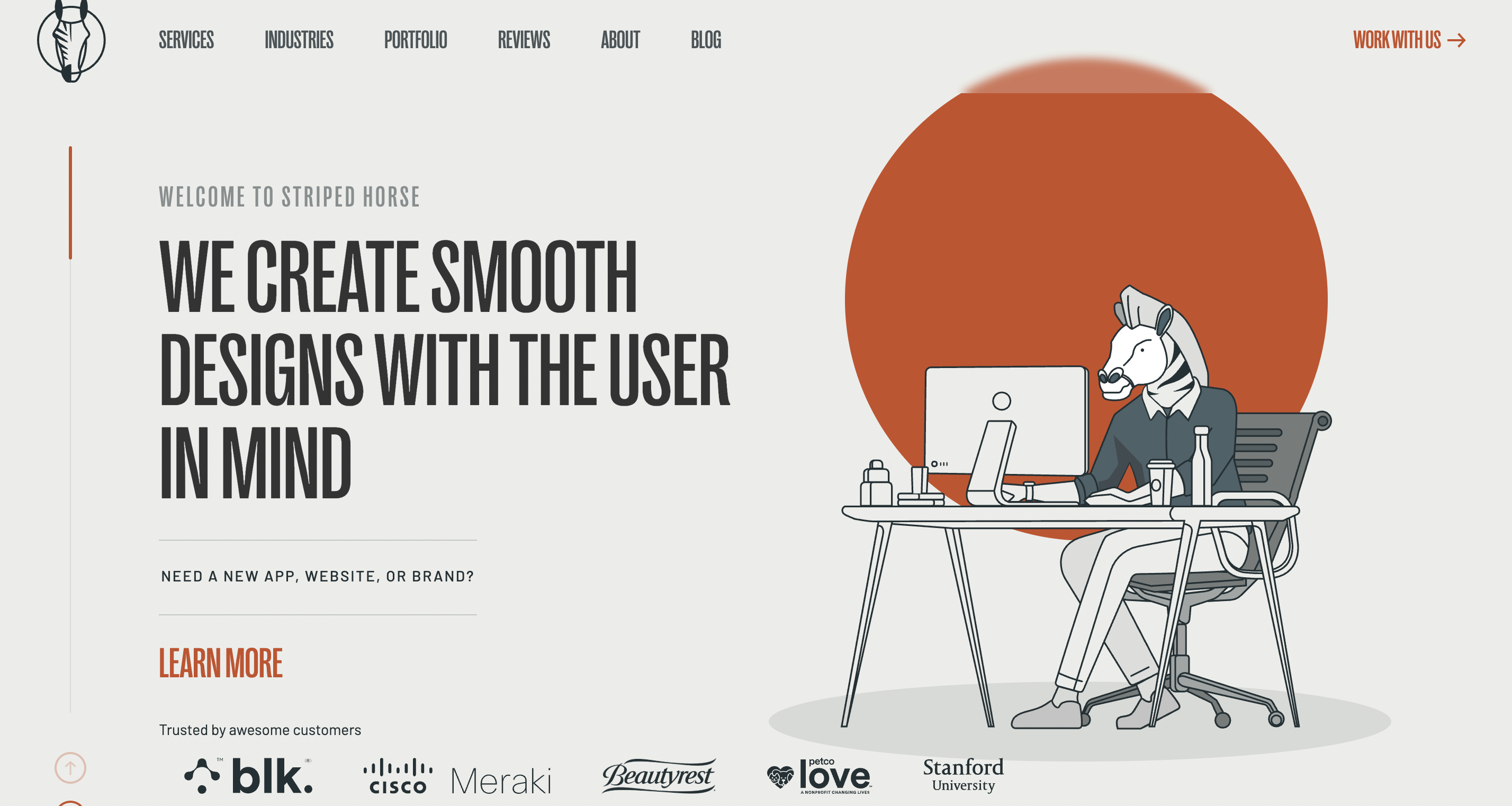
Striped Horse is a strong option for companies that want branding and the digital experience built around it handled by the same team.
Its branding process begins with discovery and a brand audit before moving into strategy and positioning, creative direction, identity development, brand guidelines, and rollout support. Its broader identity capabilities include brand identity design, logo design, graphic design, illustration design services, patterns, and print applications.
What makes this positioning particularly useful is what happens after the identity is approved.
Striped Horse also handles website design and development in-house, allowing the brand system and website to be developed as connected parts of the same project rather than handing the identity from one agency to another. The agency specifically positions branding, design, and development as capabilities delivered under one roof.
That makes its branding services particularly relevant for businesses that are launching a new brand or rebranding at the same time as they are creating a new digital presence.
For a company that only needs a highly specialized naming exercise or an isolated logo project, a specialist studio may be the better fit. But when the goal is to create a brand system and then carry it consistently into a functioning website, Striped Horse offers a practical advantage by reducing the gap between brand strategy, design, UX, and implementation.
2. Pentagram
Best for: Multidisciplinary brand identity and design
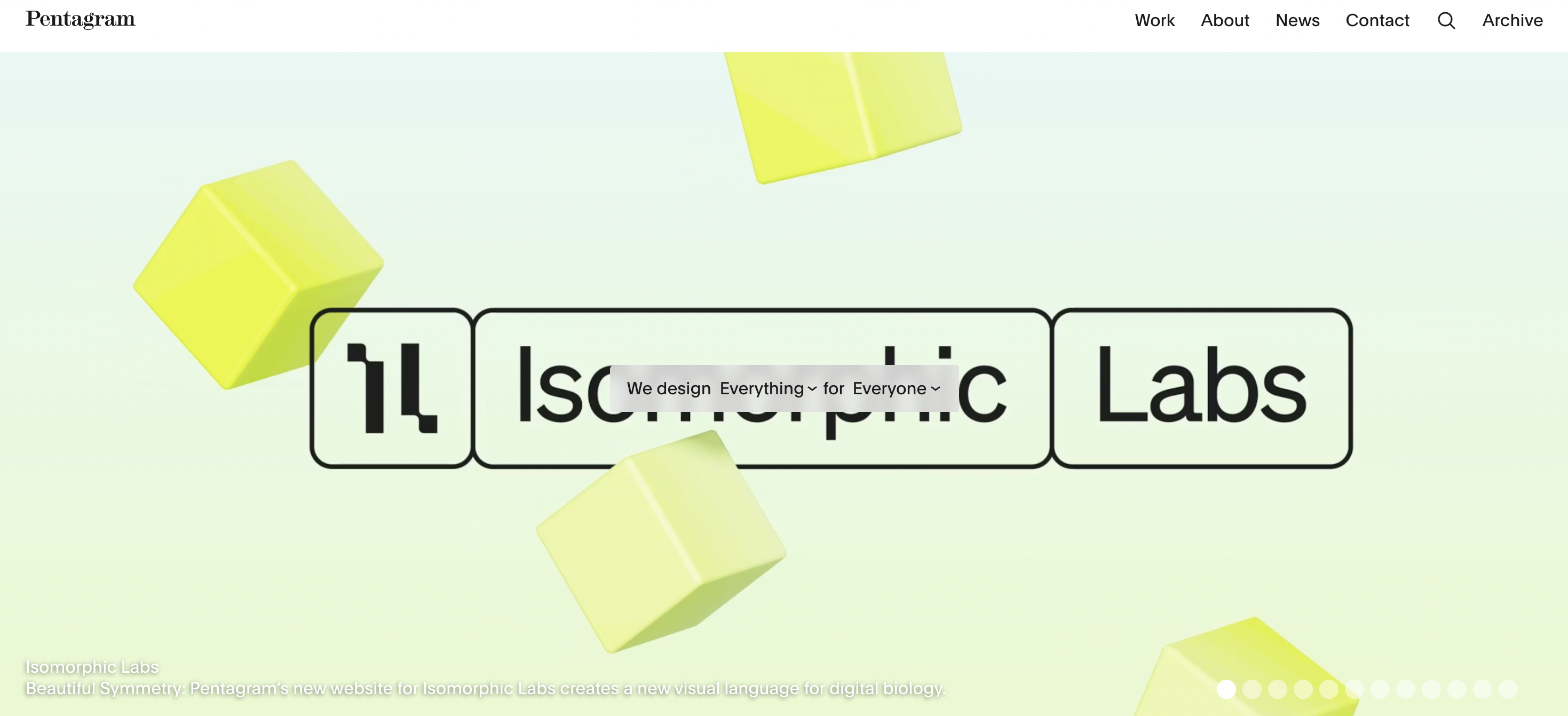
Pentagram is an independently owned multidisciplinary design studio whose work spans brand identity, brand strategy, naming, packaging, digital experiences, campaigns, environmental graphics, product design, typography, motion, and other design disciplines.
Its structure is one of the things that makes the company unusual. Pentagram's partners are practicing designers, and the studio states that the owners of the business are also the creators of the work and primary contacts for clients. Its current team includes 24 partners working across a portfolio that covers consumer brands, technology, finance, culture, education, healthcare, hospitality, transportation, and other industries.
Pentagram is a strong option for organizations that need more than a standalone visual identity. Its multidisciplinary model makes sense when branding has to extend into products, environments, communications, packaging, digital experiences, and other touchpoints while maintaining a cohesive point of view.
For companies looking for a design-led partner with significant creative depth and direct senior involvement, Pentagram remains one of the most established names in the field.
3. Landor
Best for: Large-scale brand transformation
Landor operates at the larger end of the branding market and organizes its work across consulting, design, and experience.
Its consulting practice connects business strategy to brand using research, data, and analytics. Its design capabilities extend across visual, verbal, sonic, and motion design, while its experience work covers physical, digital, customer, and employee experiences.
That breadth makes Landor particularly relevant to established organizations managing more complicated branding challenges.
A major transformation may involve much more than updating an identity. Companies may need to rethink how different products fit together, how the organization communicates internally, how customers experience the brand across multiple markets, and how the new system will be governed after launch.
Landor's combination of strategic consulting and implementation capabilities makes it better suited to those broader transformation programs than to a simple visual refresh.
For global businesses that need brand decisions to work across multiple teams, channels, and markets, Landor is one of the agencies worth considering.
4. Wolff Olins
Best for: Brand-led organizational transformation
Wolff Olins approaches branding as a tool for broader business change.
Its current capabilities include research and measurement, purpose and brand strategy, brand architecture, portfolio strategy, verbal identity, visual identity, activation, and governance. The agency also works across organizational culture and brand experience, including employee value propositions, employer branding, workplace experiences, experience strategy, and implementation.
That makes Wolff Olins particularly relevant when the problem goes deeper than visual identity.
A company may have expanded into new areas, accumulated an unclear portfolio of products, changed strategic direction, or found that its existing brand no longer represents where the organization is heading. Those challenges require decisions about what the brand should mean before decisions about how it should look.
Wolff Olins is therefore a good fit for established organizations using a rebrand as part of a larger transformation rather than treating branding as an isolated creative project.
5. COLLINS
Best for: Repositioning and distinctive brand systems
COLLINS takes a business-problem-first approach to branding.
Its current programs cover challenges including brand refreshes, repositioning, premiumization, expansion, turnarounds, new brand creation, scale-ups, portfolio restructuring, mergers, and brand work connected to an exit or IPO.
That framing says a lot about the type of engagement the agency is designed for.
Instead of starting with “What should the new identity look like?”, COLLINS focuses on questions such as whether a company needs to become more differentiated, move upmarket, enter a new category, clarify a portfolio, or change how customers perceive its value.
The creative work then becomes an expression of that strategic shift.
COLLINS is a particularly interesting option for brands that feel too similar to the rest of their category and are prepared to make a more meaningful repositioning move rather than simply modernizing their current design.
6. Koto
Best for: Digital-first and technology brands
Koto combines strategy, branding, digital experience, and campaigns, making it particularly well suited to brands that need to operate across more than traditional identity applications.
Its strategy capabilities cover areas including positioning, research, portfolio architecture, naming, messaging, culture propositions, communications, and product and UX strategy.
Brand work includes visual, verbal, motion, and sonic identity, while its digital practice extends into websites, UX, interface design, prototypes, digital products, experiential design, and design systems. Koto also develops campaigns, product marketing, activations, and digital content.
That combination is valuable for technology and digital-first businesses because the brand often needs to work inside the product itself.
A strong technology identity cannot live only in guidelines and marketing graphics. It needs to translate into interfaces, motion, product experiences, websites, launches, and an evolving design system.
For companies where the line between brand design and product experience is increasingly thin, Koto offers a particularly relevant mix of capabilities.
7. Interbrand
Best for: Enterprise brand strategy and portfolio transformation
Interbrand is especially relevant to large organizations that need to connect branding decisions with broader business strategy.
Its approach combines what it describes as human truths, brand economics, and experiences. Its brand economics capabilities include quantitative and commercial tools such as brand strength analysis, business case modeling, and segmentation.
That makes Interbrand different from a studio focused primarily on identity execution.
Large organizations often have questions that come before the design stage:
Which brands should remain independent?
How should different products relate to the parent company?
Where is the brand creating or losing value?
How should the portfolio evolve?
How should a strategy translate into customer experience?
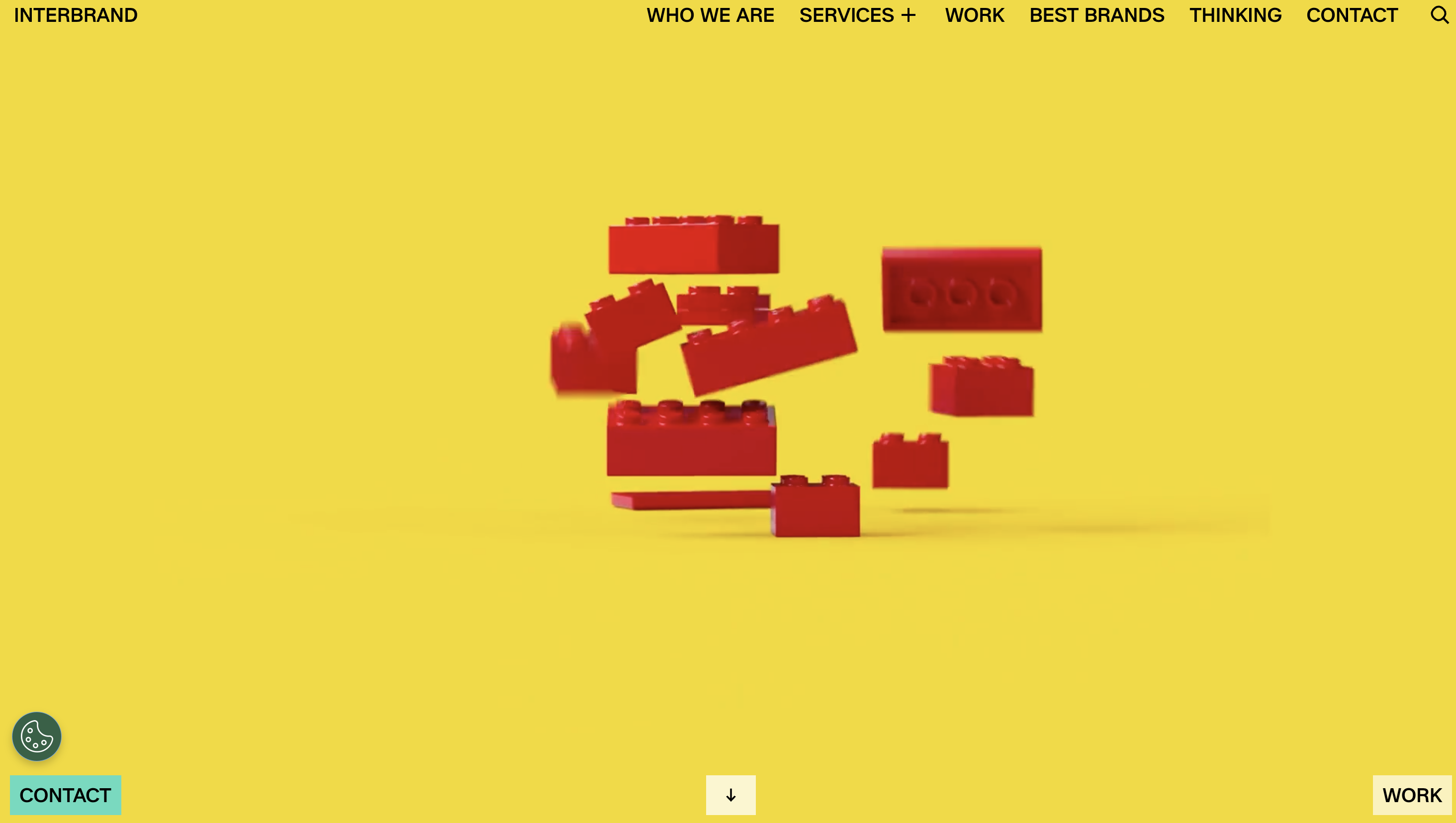
Interbrand's current work includes organizations such as Bugatti, LEGO, ViX, and Saudi Energy, illustrating its focus on businesses operating at significant scale.
For enterprises dealing with complicated portfolios, markets, or transformation programs, Interbrand is particularly worth considering when the branding assignment needs a strong commercial and analytical foundation.
8. Siegel+Gale
Best for: Simplifying complex brands
Siegel+Gale has built its positioning around a straightforward idea: simplicity.
The global brand consultancy works across strategy, design, brand communication, experience, activation, naming, brand-led change, and business analytics and insights.
That combination can be especially valuable for organizations where complexity has become part of the branding problem.
Over time, companies often accumulate multiple products, messages, audiences, sub-brands, internal terms, visual conventions, and competing priorities. The result can be a brand that makes perfect sense internally but is difficult for customers to understand.
Siegel+Gale's simplicity-led approach is well suited to that type of challenge.
The objective is not necessarily to make the brand visually minimal. It is to identify what matters most and build a clearer system around it.
For complex organizations that need to become easier to understand without losing substance, Siegel+Gale offers a distinctive strategic position.
9. FutureBrand
Best for: Strategy, identity, and branded experiences
FutureBrand combines brand strategy, brand design, brand management, and spatial design.
Its strategic capabilities include purpose and positioning, brand and portfolio architecture, internal branding, employee engagement, and naming. Its design practice covers visual and verbal identity, sonic and haptic elements, and packaging.
FutureBrand also works on brand governance and management, while its spatial practice extends branding into retail, hospitality, architecture, and customer experience.
That makes it a useful option for companies whose brand needs to operate across both communications and environments.
For a hospitality business, retailer, consumer brand, or other organization with significant physical customer touchpoints, the experience of the brand cannot be separated neatly into “identity” and “space.”
Both need to express the same strategy.
FutureBrand's range of capabilities makes it particularly appropriate for organizations looking for one system that can move between brand strategy, identity, packaging, governance, and physical experience.
10. JKR
Best for: Distinctive consumer branding
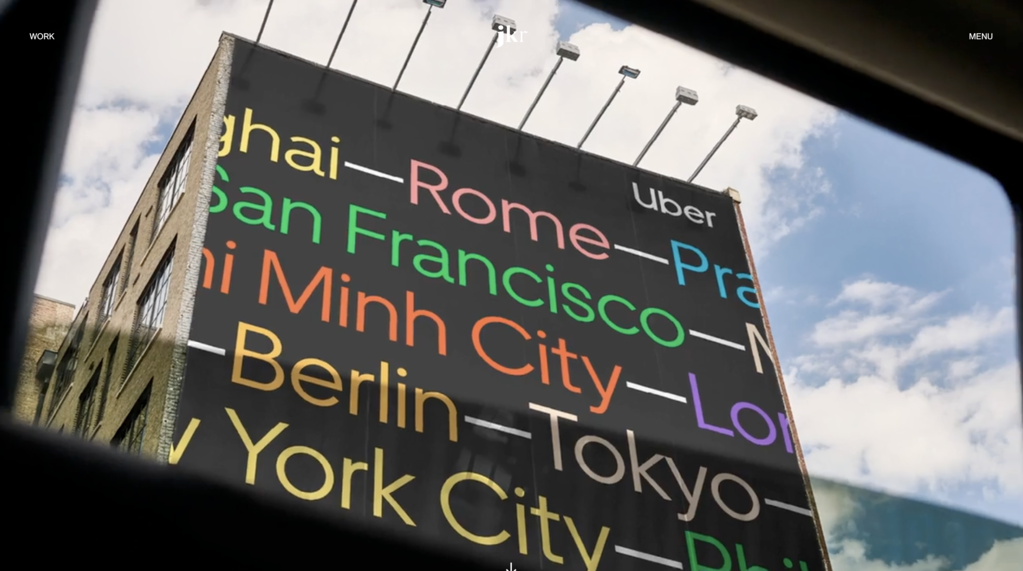
JKR, or Jones Knowles Ritchie, focuses heavily on creating brands that remain distinctive across a wide range of touchpoints.
Its brand identity capabilities include visual identity, naming, messaging, brand voice, motion systems, UI/UX, and spatial design.
Its brand experience work goes further into customer journeys, retail and activation, packaging, digital interfaces, website design, products, interactive experiences, and workplace design. Its strategy work includes purpose and positioning, portfolio strategy, internal engagement, campaigns, and innovation.
That makes JKR particularly relevant for consumer brands where recognition matters.
A strong consumer identity needs to work whether someone encounters the brand on a shelf, a phone screen, an advertisement, a website, a piece of packaging, or a physical space.
The challenge is not simply consistency. It is making sure the brand remains recognizable and distinctive even when the format changes.
For established consumer brands or businesses preparing to operate across many customer-facing channels, JKR's combination of identity and experience design is worth exploring.
How we selected the best branding agencies
There is no fully objective formula for determining the best branding agency.
The right choice depends on the problem being solved, the size of the organization, the complexity of the brand, and what needs to happen after the strategy and identity have been developed.
For this list, we focused on five main factors.
Brand strategy capabilities
We looked beyond visual identity to determine whether an agency can address positioning, audience, differentiation, architecture, naming, messaging, research, or other strategic questions where relevant.
A strong logo cannot compensate for unclear positioning.
Quality and breadth of brand work
We considered whether the agency demonstrates the ability to build systems rather than isolated creative assets.
Depending on the firm, that may include identity, verbal branding, motion, digital experiences, packaging, campaigns, products, spaces, and other applications.
Ability to solve meaningful business problems
A branding agency should be able to address more than aesthetic change.
Relevant challenges may include launching a new company, repositioning an existing brand, entering a new market, consolidating a portfolio, moving upmarket, supporting a merger, or translating a new strategy into customer experience.
Digital capabilities
Brand systems increasingly need to work on websites, apps, products, interfaces, motion, social platforms, and other digital environments.
We therefore considered how effectively each agency appears able to take branding beyond static identity applications.
Fit for different types of businesses
We intentionally included different kinds of agencies.
Some are most appropriate for global enterprise transformation. Others are stronger fits for startups, consumer brands, technology companies, challenger brands, cultural organizations, or companies looking for branding and digital implementation from one partner.
This article is published by Striped Horse, which is included at #2. Rather than presenting the order as an independent industry ranking, Striped Horse is included based on the same practical considerations used throughout the list: its strategy and identity process, its branding capabilities, and its ability to carry a brand directly into website design and development.
How to choose the right branding agency
The most recognizable agency is not automatically the right one for your business. The strongest fit usually depends on the nature of the problem, the scope of the engagement, and how much support you need after the brand strategy and identity are complete.
Define the problem before comparing portfolios
Start by identifying what actually needs to change. A company launching from scratch has very different needs from an established organization simplifying a complex portfolio. A business preparing to move upmarket may need repositioning and messaging, while another may already have a strong strategic foundation and only need to evolve the identity.
Defining the problem first makes it easier to evaluate agencies based on relevant experience rather than simply choosing the portfolio you like most.
Look at strategy as well as visual quality
A strong portfolio is important, but the final visuals tell only part of the story. Review how the agency describes the problem, what strategic decisions came first, and how the identity was developed to support those decisions.
The strongest branding work usually has a clear rationale behind it. If an agency can explain how its work changed positioning, clarified a portfolio, improved differentiation, or supported a broader business goal, that is often more meaningful than the visual style alone.
Review similar challenges, not only similar industries
Industry experience can be useful, but it should not be the only selection criterion. An agency may never have worked with a company exactly like yours but may have solved the same type of problem many times.
A business consolidating several products should look for portfolio architecture experience. A startup should look for examples of brands built from the ground up. A company planning a major digital redesign should prioritize agencies whose identity systems translate well into websites and digital products.
The nature of the challenge is often more important than the industry label.
Understand what is included in the engagement
Different agencies use the word “branding” to describe very different scopes of work. One proposal may focus mainly on visual identity, while another may include research, positioning, naming, messaging, architecture, verbal identity, digital design, launch support, and governance.
Before comparing price, make sure you are comparing the same level of service. A larger scope may cost more but may also address issues that would otherwise require additional partners later.
Find out who will work on the project
The team presenting the pitch is not always the team responsible for the day-to-day work. Ask who will lead strategy, who will oversee creative direction, how involved senior team members will remain, and which services are handled internally.
Branding projects often involve difficult decisions, multiple stakeholders, and subjective feedback. A strong working relationship and clear project structure can make a significant difference to the final outcome.
Consider what happens after the identity is approved
Branding becomes useful only when it works in real applications. The identity may eventually need to appear across the website, sales materials, campaigns, packaging, social content, presentations, products, physical spaces, or internal communications.
If the website is part of the same initiative, working with an agency that also provides web design services can help create a smoother transition from brand strategy into digital execution. For other companies, a specialist branding studio may still be the better fit. The right model depends on how broad the project needs to be.
Choose an agency that can support future growth
The right branding agency should understand not only where your business is today, but where it is likely to go next. A brand system may need to accommodate new products, additional markets, acquisitions, sub-brands, retail expansion, or new digital experiences over time.
That is why flexibility and scalability matter when evaluating an agency's approach. The goal is to create a brand that feels consistent and recognizable now without becoming restrictive as the business evolves.
Conclusion
The best branding agency depends on your goals, scope, and the type of support your business needs. Start by defining the problem clearly, then compare agencies based on their strategy, relevant experience, process, and ability to carry the brand into real-world applications.
If you’re planning a new brand or rebrand and want branding, website design, and development handled as one connected process, contact Striped Horse to discuss your project.