.svg)


Do Nofollow Links Help SEO? Definitive Answer
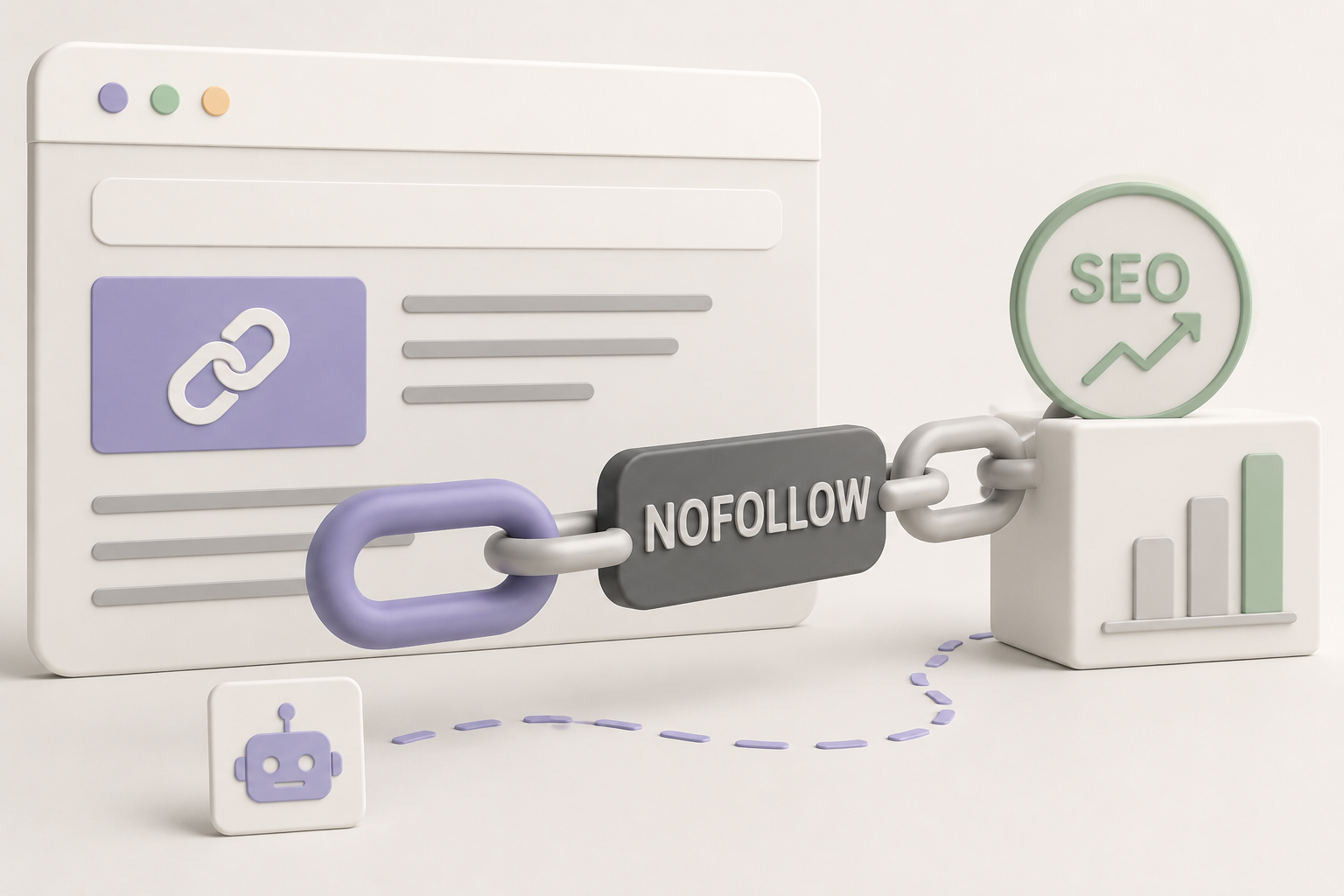
Do nofollow links help SEO? Yes, but not always in the direct “this link will push my page higher tomorrow” way. A nofollow link usually does not pass authority like a standard followed link, but it can still support SEO through referral traffic, brand visibility, discovery, credibility, and a more natural backlink profile.
The mistake is thinking that a link has only two possible outcomes: it either passes ranking power or it is useless. That is not how modern SEO works. A nofollow link can still put your brand in front of the right audience, send qualified visitors to your site, increase branded searches, and create opportunities for future followed links.
So, the definitive answer is this: nofollow links can help SEO, but they should not be treated as a shortcut for rankings.
What is a nofollow link?
A nofollow link is a normal clickable link with a small piece of HTML added to it: rel="nofollow". That attribute tells search engines that the website linking out does not want to fully endorse or pass traditional ranking value to the destination page.
For users, nothing changes. They can still click the link, visit the page, read the content, and become a customer. The nofollow attribute is mostly a signal for search engines, not a visible change for people browsing the web.
A nofollow link usually looks like this: <a href="https://example.com" rel="nofollow">Example</a>
A standard link does not need a special “dofollow” tag. In SEO, people often say “dofollow link,” but technically it just means a regular link without a nofollow, sponsored, or UGC attribute. Google’s own documentation says regular links do not need a rel attribute when you expect Google to fetch and parse them normally.
How Google treats nofollow links today
Google no longer treats nofollow in the exact same way it did when the attribute was first introduced. In 2019, Google announced that nofollow, sponsored, and ugc attributes would be treated as hints about which links to consider or exclude in Search, rather than strict signals in every possible case.
That does not mean every nofollow link passes ranking value. It means Google may use its own systems to decide how to interpret a link based on context, source quality, relevance, and other signals. A nofollow link from a trusted, relevant publication is very different from a nofollow link dropped into a spammy comment section.
This is why the answer to “do nofollow links help rankings” needs nuance. They are not the same as followed backlinks, but they are not automatically worthless either.
Do nofollow links help SEO?
Yes, nofollow links can help SEO, especially when they come from real websites, trusted communities, publications, directories, or platforms where your audience actually spends time. Their value is often indirect, but indirect does not mean unimportant.
The SEO value of nofollow links can come from people clicking the link, discovering your brand, spending time on your site, searching for your company later, or linking to your content from another website in the future. That is why nofollow links SEO value should be judged by more than just whether the link passes authority.
A nofollow link from a relevant article, list, forum, review platform, or industry website can still be useful if it brings the right people to the right page. A followed link from a low-quality or irrelevant site may look better in a backlink report, but it may do nothing for the business.
Do nofollow links help rankings directly?
In most cases, you should not build your SEO strategy around nofollow links as direct ranking boosters. A followed editorial link from a relevant, trusted website is still stronger from a traditional link equity perspective.
But rankings are not built from link attributes alone. Search engines evaluate many signals together, including relevance, content quality, technical accessibility, brand signals, user behavior, site structure, and overall trust. A nofollow link can support some of those surrounding signals, even if it does not work like a classic followed backlink.
The safest way to think about it is this: if a nofollow link helps rankings, treat it as a bonus. The more reliable value is visibility, referral traffic, trust, and discovery.
The real SEO value of nofollow links
The real value of nofollow links is that they can create movement around your brand. SEO is not only about collecting link equity. It is about helping the right people and search engines understand that your business exists, that your content is relevant, and that your website deserves attention.
A nofollow link from a high-traffic website can send visitors who are already interested in the topic. Those visitors may read your content, browse your services, sign up, request a quote, or remember your name. Even if the link itself does not pass traditional authority, the business value can still be real.
Nofollow links can also support brand visibility. When your company appears on relevant websites, industry lists, community discussions, or partner pages, people start seeing your name in the right context. That is why link building should not be separated from branding services. A link can create awareness, but the brand experience determines whether people remember you.
They also help create a natural backlink profile. Real brands usually do not have only followed links. They attract a mix of followed links, nofollow links, branded mentions, naked URLs, social links, directory listings, sponsored placements, and user-generated mentions. A backlink profile with no variety can look less natural than one with a healthy mix.
Where nofollow links usually come from
Nofollow links often appear on platforms where website owners need to control spam, paid links, or user-generated content. Common examples include social media platforms, forums, blog comments, Reddit, Wikipedia, press release websites, sponsored articles, affiliate content, directories, review platforms, and some online communities.
For local businesses, nofollow links often come from citations, business listings, community websites, local directories, sponsorship pages, and review platforms. These links may not always pass traditional authority, but they can still support visibility when they are part of a broader local seo for small business strategy.
The key question is not only “Is the link followed or nofollow?” The better question is “Is this link placed somewhere relevant, trustworthy, and likely to be seen by the right audience?”
Nofollow vs dofollow links: what is the difference?
A followed link is a standard link that search engines can use as a normal ranking signal. A nofollow link includes an attribute that tells search engines not to treat the link as a full endorsement in the usual way.
There are also two related attributes: rel="sponsored" and rel="ugc". Google recommends using sponsored for paid links, sponsorships, and affiliate-style placements, while ugc is used for user-generated content such as comments and forum posts.
Here is the simple version:
The practical takeaway is simple: use the right attribute for the right situation, and do not judge a link only by its label.
Are nofollow links good for SEO?
Nofollow links are good for SEO when they come from relevant, trusted, visible places. A nofollow link from an industry publication, niche community, local directory, or respected resource page can be far more useful than a followed link from a random, low-quality website.
Good nofollow links usually have at least one of these qualities: they are relevant to your business, they appear on pages with real traffic, they come from trusted websites, they put your brand in front of the right audience, or they create a path to future mentions and links.
Bad nofollow links are different. Spam comments, irrelevant directory submissions, automated forum posts, and mass link drops do not become valuable just because they point to your site. If the link exists only to manipulate search engines and has no real audience value, it is not a strong SEO asset.
Why nofollow links alone are not enough
Nofollow links can help, but they cannot carry a full digital marketing strategy by themselves. You still need strong content, technically sound pages, a clear site structure, relevant internal links, useful service pages, and a website that earns trust once people arrive.
Backlinks can bring people to a page, but the page still has to be clear, fast, helpful, and easy to navigate. That is part of what makes a good website from both an SEO and user experience perspective.
If someone clicks a nofollow link and lands on a confusing page, the opportunity is wasted. If they land on a page that answers their question, explains the offer, and makes the next step obvious, that same link can create real business value.
Nofollow links and website quality
A link is only as useful as the page it points to. If a nofollow link sends qualified traffic to a weak landing page, poor design can quietly kill the opportunity. Visitors may leave before they understand what you offer, even if the source of the traffic was strong.
That is why SEO should not be isolated from design. A strong web design agency looks at the full journey: where visitors come from, what they see first, how quickly they understand the message, and what action they are encouraged to take next.
Nofollow links can open the door. The website has to do the rest.
How to check if a link is nofollow
The easiest way to check if a link is nofollow is to inspect the page code. Right-click the link, choose “Inspect,” and look for rel="nofollow" in the HTML. If you see that attribute, the link is marked as nofollow.
You may also see rel="sponsored", rel="ugc", or a combination like rel="nofollow sponsored". These attributes help search engines understand the relationship between the linking site and the linked page.
For larger backlink checks, SEO tools like Ahrefs, Semrush, Moz, Screaming Frog, and browser extensions can help you see which backlinks are followed, nofollow, sponsored, or UGC.
Should you try to change nofollow links to followed links?
Sometimes, but not always. If a website mentioned your business naturally and added a nofollow tag by default, you can politely ask whether they would consider making it a standard link. But if the platform has a clear policy, pushing too hard is not worth it.
Many major websites nofollow outbound links by default. Social platforms, forums, large publishers, directories, and community sites often do this to protect themselves from spam and link manipulation. In those cases, the link can still be valuable if it brings visibility or traffic.
Do not spend too much time chasing link attribute changes. A nofollow link from the right page can be more useful than a followed link from the wrong one.
Should you build nofollow links on purpose?
You should build visibility on purpose, not nofollow links for the sake of nofollow links. If a nofollow link comes from a place where your audience is active, it can be worth earning. If it comes from a low-quality source with no relevance, it is not worth the effort.
For example, being mentioned in a respected industry article, niche community discussion, podcast page, local business directory, or comparison list can support brand discovery even if the link is nofollow. The goal is not just to collect backlinks. The goal is to show up where trust is already being built.
A smart SEO strategy includes both followed and nofollow links, but it prioritizes relevance, quality, and business impact over the attribute alone.
Final answer: do nofollow links help SEO?
Yes, nofollow links help SEO when they create real visibility, referral traffic, brand awareness, discovery, and a natural backlink profile. They are not the same as followed links, and they should not be treated as guaranteed ranking boosters.
The best way to think about nofollow links is this: they may not always pass traditional authority, but they can still pass attention. And attention from the right audience can lead to branded searches, engagement, conversions, and future links.
So, are nofollow links good for SEO? Yes, when they come from relevant, trustworthy, visible sources. No, when they are spammy, irrelevant, or built only to manipulate rankings.